




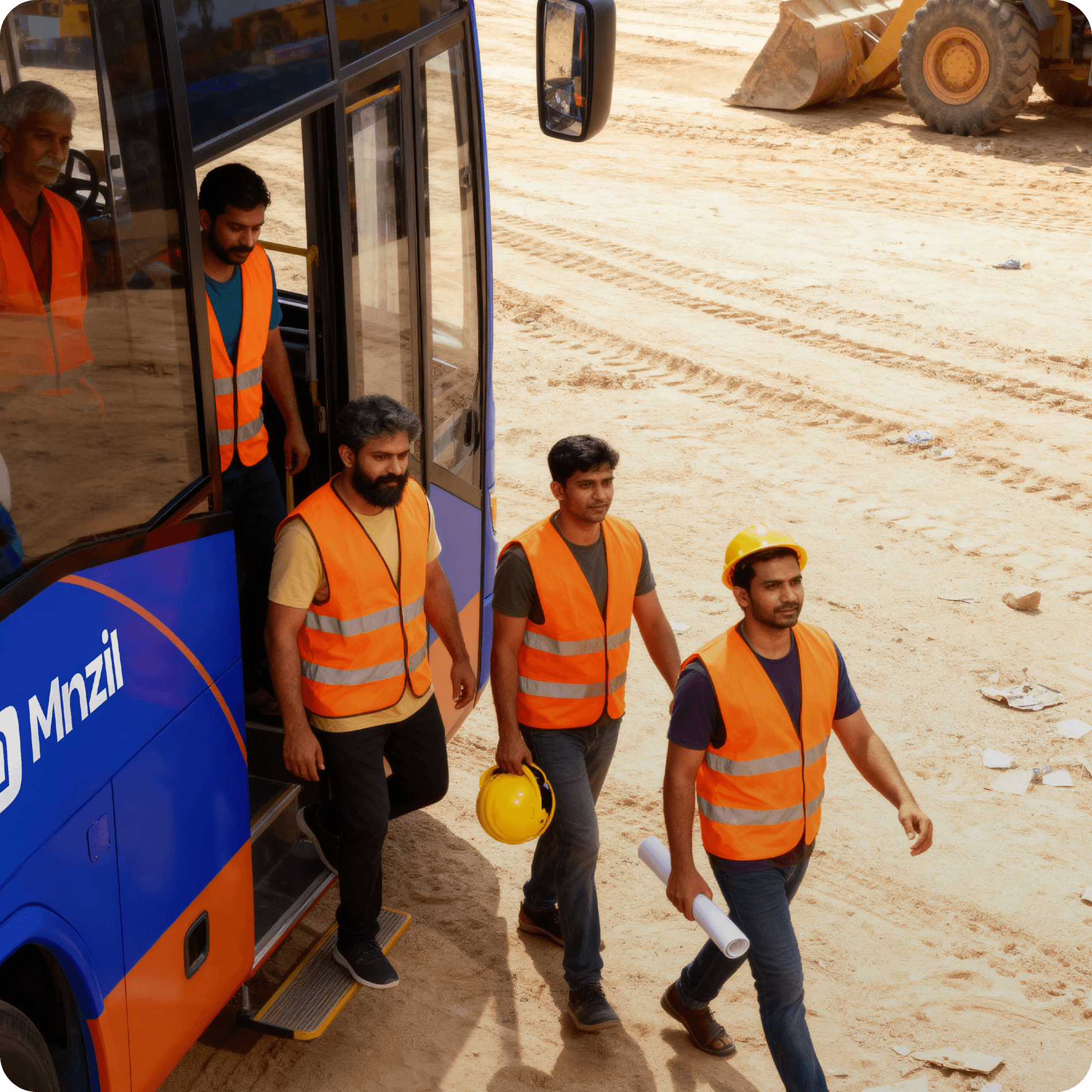
A contractor wins a substation upgrade in the Eastern Province. The scope runs twenty months. Headcount starts at forty, climbs past three hundred at peak, then falls to sixty for commissioning. Somewhere in the mobilization plan sits a line called "labour accommodation," and how it is handled decides whether the project holds its margin.
Permanent worker housing assumes a stable workforce in one place indefinitely. A project is the opposite: a start date, an end date, a headcount curve that rises and falls, and often no suitable housing stock nearby. Sign a three-year lease for a twenty-month job and you pay for empty beds after demobilization. Under-commit and you scramble for beds during ramp-up, negotiating from weakness.
Why project accommodation is a different problem
Four things separate it from permanent housing.
Duration mismatch. Landlords and compound operators think in annual cycles; projects think in scopes. A twenty-month project against twelve-month lease terms means renewing a full year to cover eight months of need, or winning a break clause the landlord has no reason to give.
The headcount curve. Permanent housing is sized once. Project accommodation must absorb a ramp-up, hold a peak that may last only a few months, then shed capacity. Size for peak and you pay for peak all project long. Size for average and you are short of beds when the site is busiest.
Location. Many Saudi projects sit where the work is, not where the housing is: pipeline corridors, remote industrial plots, greenfield plants, highway sections. With no rentable stock within a reasonable commute, you are building a site labour camp.
Cost recovery. Accommodation is a preliminaries cost carried inside a fixed contract value. If your model costs more than what was priced at tender, the difference comes out of margin.
The four models and what each is good for
Renting existing units near site. Apartments, villas, or beds in an established labour compound within commuting distance. Fastest to arrange, no site works, and it suits urban projects with modest crews. The weaknesses are lease rigidity, rate spikes when several contractors mobilize in the same area, and the fact that bare units still need furnishing, cleaning, security and a meal arrangement.
Portacabin and modular camps on or near site. The default answer for remote work. You control layout, bed count, sanitation ratios and dining facilities, and the camp can sit minutes from the work face. Units can be added or removed as headcount moves. The cost is lead time and complexity: land, permits, levelling, power, water, wastewater, fencing, fire safety, camp management. Built camps justify themselves on longer projects with larger crews, where setup cost spreads across enough bed-months to beat rental.
Managed accommodation contracted per bed per month. A provider operates the housing and sells serviced beds: furnished rooms, utilities, cleaning, security, maintenance, usually with catering and transport in the same package. You pay a unit rate and hold no asset. This fits a ramping headcount best, because the commercial structure can flex with occupancy rather than locking you to a fixed bed count.
Hotels and furnished apartments for supervisory staff. Engineers, QA/QC personnel and short-stay commissioning teams need different accommodation from the general workforce, and furnished units also cover the weeks before the camp is ready.
Matching the model to project length and crew size
- Short project, small crew: rent existing units or buy serviced beds. Do not build.
- Short project, large crew, remote: managed accommodation or a provider-owned camp, so setup and exit risk sit with the provider.
- Long project, large crew: a purpose-built modular camp starts to make sense, especially where proximity saves transport cost and unproductive travel hours.
- Long project, swinging headcount: a hybrid. A base sized to the sustained headcount, with flexible serviced beds layered on for the peak.
Run the arithmetic on your own numbers: bed-months required, setup and exit cost, daily transport cost per worker, and the productive hours saved by sitting closer to the work.
Mobilization: what must be ready before the first bus arrives
Accommodation plans fail at mobilization, almost always because lead time was underestimated. Rental takes weeks. A modular camp takes months from land approval to occupancy, and utility connections are the usual bottleneck. Municipal approvals, civil defence sign-off and power and water provisioning do not compress because your programme slipped. Before the first worker sleeps on site, these must be live, not promised:
- Beds, lockers and rooms within the occupancy limits you committed to
- Potable water supply with tested quality
- Power, with backup capacity for summer cooling
- Sanitation and wastewater handling at compliant ratios to occupancy
- A working kitchen and dining facility, or a contracted meal service
- Transport to the work face, scheduled around shift patterns
- Fire detection, extinguishers, escape routes and a first aid point
- Permits and municipal approvals issued and on file
Build backwards from the date the first crew lands and open the accommodation workstream at tender stage.
Contracting for a headcount that moves
A fixed-bed-count annual contract is the wrong instrument for a ramping project. It bills peak capacity from month one and keeps billing after demobilization starts.
Better terms: a committed base bed count matched to your sustained headcount with a flexible tier above it; a defined notice period for scaling in either direction, ideally thirty days or less; pricing that does not load the flexible tier so heavily that flexibility becomes uneconomic; and termination tied to project completion, not a calendar anniversary.
Then feed the provider real forecasts. An operator given a rolling ninety-day projection can plan capacity. One told on Thursday that a hundred workers arrive Sunday will fail or charge for the rush.
Compliance does not relax because the project is short
Saudi labour housing requirements apply to temporary accommodation exactly as they do to permanent compounds. Occupancy limits per room, ventilation and cooling, sanitation ratios, potable water, kitchen hygiene, fire safety, waste management and separation from hazardous operations are all inspectable on a site camp, and civil defence requirements apply to modular structures too.
The responsibility sits with the employer, and outsourcing the camp does not outsource the liability. Inspect before signing, write standards into the contract, audit during operation.
Demobilization and exit
Plan the exit while you are still mobilizing. Know in writing who dismantles and removes modular units, who restores the land, and what the reinstatement standard is if the land is leased or client-owned.
Commercially, the exit clause matters more than the headline rate. Confirm the notice period for releasing beds, whether release can happen in stages tracking your demobilization curve, whether early termination carries a charge, and how final occupancy is reconciled against billing. A competitive rate becomes the most expensive option on the job if you are paying for three hundred beds while sixty workers commission.
Cost drivers to price at tender
Accommodation cost is driven by bed-months, not monthly rate alone. The variables that move the number are location and local housing scarcity, model choice, setup and exit cost for built camps, utilities and fuel, catering standard, transport distance, and the cost of the flexibility you bought.
Two comparisons deserve proper work at tender. First, total cost across the whole project rather than monthly rate: a cheap rate with rigid terms often loses to a higher rate with real flexibility. Second, transport versus proximity: housing further out is cheaper per bed but adds fleet cost and travel hours that erase the saving.
Temporary workforce accommodation management is a project workstream with its own lead times, approvals and commercial risk. Handled that way from tender, it holds its budget. Handled late, it eats the margin.
Mnzil provides managed worker accommodation for companies operating across Saudi Arabia, including project-duration housing with catering and worker transport delivered as one package. If you are mobilizing for a fixed-duration project and want housing, meals and transport under a single contract that scales with your headcount, our team can work through the requirement with you.